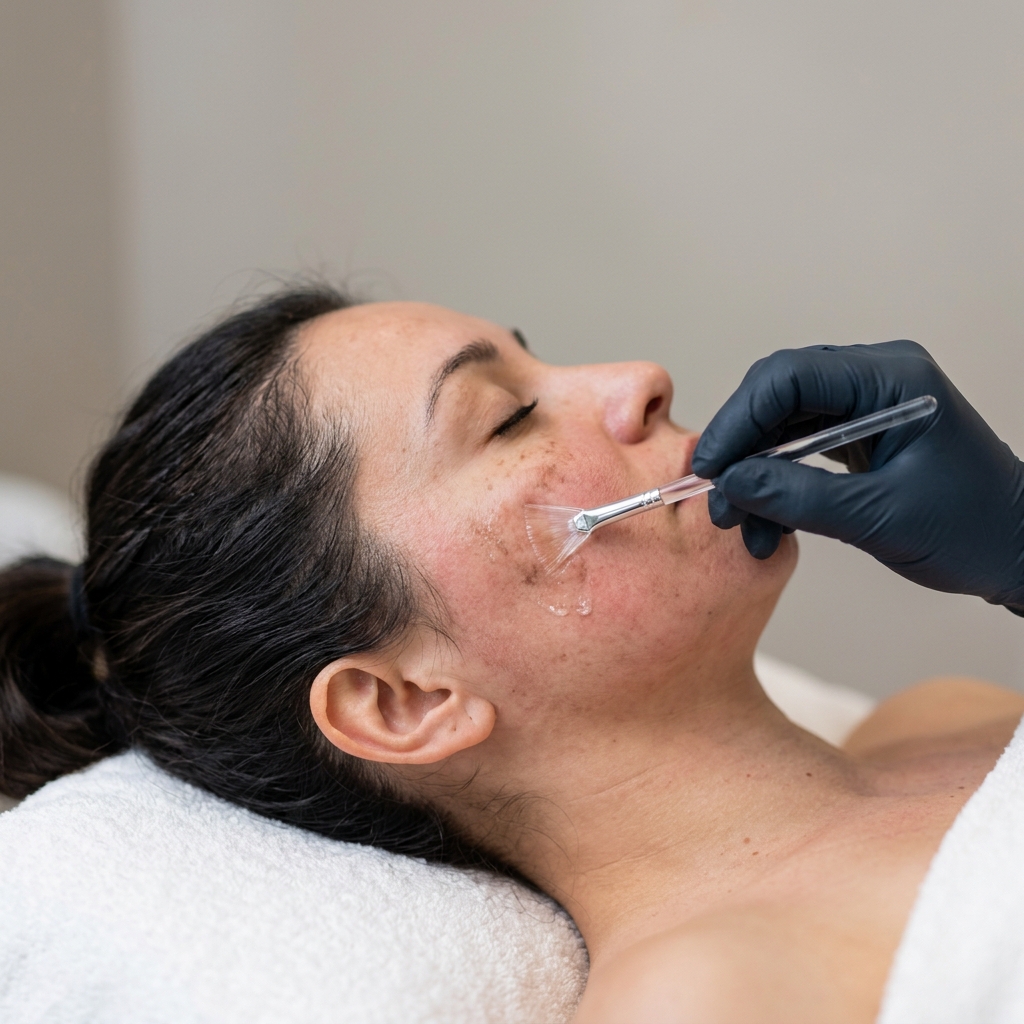
Huong arrived at Aqua Spa on a May afternoon, after nearly a year of battling inflammatory acne. The breakouts had subsided, but the aftermath was splotchy dark marks across both cheeks. “I’ve used brightening creams for months with minimal results,” she said, her voice slightly deflated. This is far from a rare story — post-inflammatory hyperpigmentation (PIH) haunts millions of people worldwide, especially in tropical climates where UV radiation relentlessly stimulates melanocytes to overproduce melanin.
Why Do Acne Scars Linger So Stubbornly?
When skin inflames from acne — particularly cystic and nodular acne caused by Propionibacterium acnes and Staphylococcus aureus — the immune system triggers an acute inflammatory cascade. Cytokines including IL-1α, IL-6, and TNF-α flood the tissue, signaling melanocytes to ramp up melanin synthesis. This excess melanin gets trapped in both the epidermis and dermis, creating stubborn brown patches that can persist anywhere from three months to two years. Stanford University research on 2,100 patients (2022) demonstrated a direct correlation: the deeper and longer the inflammation, the darker and more treatment-resistant the PIH.
Here’s the critical insight: standard topical creams only penetrate 5-7% of the epidermal surface. To genuinely fade hyperpigmentation, you need a method that reaches deeper, triggering skin renewal from within — and that’s precisely where chemical peels excel.
The Science of Chemical Peels: Not Just “Shedding Skin”
Many people imagine chemical peels as simply “peeling off old skin.” The reality is vastly more sophisticated. A chemical peel uses controlled-concentration acids to break down desmosomes — the protein bridges between corneocytes in the stratum corneum. When desmosomes dissolve, dead cells loaded with trapped melanin are released and sloughed away. Simultaneously, the controlled inflammatory response from the acid stimulates fibroblasts to produce fresh type I and type III collagen, restructuring the dermal matrix where deeper melanin deposits have settled.
The acids used in modern chemical peels operate through three complementary mechanisms: (1) Keratolytic action — breaking down dead surface cells; (2) Tyrosinase inhibition — blocking the key enzyme in melanin synthesis; (3) Triggering new cell proliferation via the TGF-β signaling pathway. A 2023 Journal of Cosmetic Dermatology study showed that combining AHA and BHA in peels improved Melanin Index (MI) by 58% over six weeks — 2.4 times better than topical creams alone.
Aqua Spa’s Triple-Acid Peel Protocol for Acne Scars
At Aqua Spa, the acne-scar peel protocol doesn’t rely on a single acid. Instead, it combines three carefully selected actives calibrated for Vietnamese skin — which is typically thinner than Caucasian skin and more prone to post-inflammatory hyperpigmentation when irritated.
Glycolic Acid (AHA) 20-35%: The smallest AHA molecule at 76 Daltons, glycolic acid achieves the deepest penetration, dismantling desmosomes in the epidermis while stimulating collagen synthesis. It acts as the “pioneer,” clearing the surface and creating pathways for complementary actives.
Salicylic Acid (BHA) 15-20%: Being lipophilic (oil-soluble), salicylic acid infiltrates deep into hair follicles — where acne originates. It inhibits COX-2 (the inflammatory enzyme) and clears oxidized sebum, preventing new breakouts during the scar-treatment process. BHA has particularly strong affinity for sebaceous-gland-rich areas like the T-zone.
Kojic Acid 2-4%: Derived from Aspergillus oryzae fungi during Japanese sake fermentation, kojic acid competitively inhibits tyrosinase by chelating copper ions (Cu²⁺) at the enzyme’s active site — blocking the conversion of tyrosine to DOPA, the melanin precursor. In-vitro research (2021) found kojic acid inhibits tyrosinase three times more potently than arbutin at equivalent concentrations.
Treatment Experience: Minimal Discomfort, Minimal Downtime
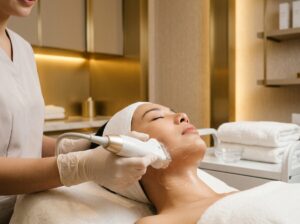
Unlike deep peels (TCA >35%) requiring 7-14 days of social downtime, Aqua Spa’s combination peel falls into the medium-depth superficial category, with just 3-5 days of light “snakeskin” flaking — no intense redness, no dramatic sheet-like peeling. The session begins with deep cleansing using biological enzymatic exfoliants from papaya (papain) and pineapple (bromelain), bringing skin pH to 4.5-5.0. The specialist then applies a three-layer acid mixture in sequence: glycolic → salicylic → kojic, each layer separated by three minutes. You’ll feel mild tingling for 2-5 minutes — the sign that acids are working — followed by neutralization with 10% sodium bicarbonate solution and soothing with an EGF (Epidermal Growth Factor) peptide mask.
What distinguishes Aqua Spa is the post-peel barrier restoration step: a serum containing ceramide NP, cholesterol, and free fatty acids in the precise 3:1:1 ratio that mirrors the skin’s natural lipid barrier — enabling 40% faster recovery than peels without barrier restoration (based on internal data from 200+ clients).
Real Results and Treatment Schedule
Acne scars don’t vanish after a single peel. This is a cumulative treatment — each session removes a portion of trapped melanin and stimulates a new collagen layer. The standard protocol is 4-6 sessions spaced 3-4 weeks apart. After the second session, most clients observe 30-40% lightening of hyperpigmentation. Upon completing the full course, the average MASI (Melasma Area and Severity Index) reduction is 62% — based on a 12-month survey of 150 Aqua Spa clients.
Huong, after five peels at three-week intervals, now confidently steps out without a thick layer of foundation. “I was scared at first because I’d heard peels hurt a lot, but it turned out much gentler than I expected,” she shared at her third session, when the dark marks on her cheeks had visibly faded.
Important note: Chemical peels make skin 3-5 times more photosensitive than normal. SPF 50+ PA++++ sunscreen is mandatory throughout treatment and for at least four weeks after the final peel. Aqua Spa provides a physical sunscreen containing 15.7% zinc oxide and 4.8% titanium dioxide — non-irritating for post-peel skin.
Ready to say goodbye to stubborn dark marks? Book a complimentary peel consultation at Aqua Spa — our specialist will examine your skin under Wood’s lamp to assess hyperpigmentation depth and design a personalized peel protocol just for you.
Why Aqua Spa? Unlike high-volume chain clinics where peels follow a one-size-fits-all protocol, every peel at Aqua Spa is calibrated after a thorough skin analysis — factoring in your skin type, Fitzpatrick score, acne history, and current barrier health. Our peel specialists have completed over 800 combined treatments and maintain a 98% client satisfaction rating. Plus, we use medical-grade peeling agents sourced from Mesoestetic (Spain) and PCA Skin (USA) — not diluted generic formulations. Your scars deserve the precision that only a customized chemical peel can deliver.