If you’re stepping into your 30s and starting to notice the first signs of aging — fine lines at the corners of your eyes, skin that’s not as firm as it used to be, a face gradually losing its plump, lifted look — then chances are you’ve already found yourself “lost” in the world of skin rejuvenation technologies. HIFU, RF, Nano, Laser, IPL, Thermage, Ultherapy… a jungle of jargon and enticing advertisements that leave even seasoned beauty enthusiasts feeling confused. And it’s not just overwhelming — it’s risky. Choosing the wrong technology isn’t just a waste of money; it can also fail to deliver the results you’re hoping for, and may even cause skin damage if performed at a substandard facility. That’s why we’re here to help you cut through the noise.
This article provides an in-depth, side-by-side analysis of the three most popular and sought-after skin rejuvenation technologies at Aqua Spa: HIFU, RF, and Nano. I’ll help you understand exactly how each technology works beneath the surface, who it’s truly suitable for, what results you can realistically expect, and — most importantly — which one is the right choice for your skin right now. No fluff, no marketing hype. Let’s get started.
Let’s begin with HIFU — the technology widely dubbed the “non-surgical facelift.” HIFU stands for High-Intensity Focused Ultrasound. Its mechanism is remarkably intelligent and sets it apart from nearly every other skin-tightening technology: rather than spreading energy diffusely across the skin’s surface, HIFU concentrates all of its acoustic energy onto a single precise point at a depth of 1.5mm, 3.0mm, or 4.5mm beneath the skin — right at the SMAS layer (Superficial Musculoaponeurotic System). This is the very same connective-tissue-and-muscle layer that plastic surgeons must physically manipulate and tighten when performing a traditional surgical facelift. At the focal point, the temperature instantaneously rises to 60–70°C in under one second, causing immediate denaturation (controlled thermal damage) of old, lax collagen fibers. This micro-injury is intentional — it triggers the body’s natural wound-healing response and kickstarts a powerful neocollagenesis (new collagen production) process that continues for 3 to 6 months after treatment. The skin essentially rebuilds itself from the inside out, layer by layer, producing tighter, denser, and more youthful scaffolding.
So who is HIFU right for? If you’re over 30 and beginning to see clear, visible signs of sagging around the cheeks, jawline, and neck — this technology is designed specifically for you. If you want to lift facial muscles, eliminate a stubborn double chin, and dramatically improve your overall facial contours but aren’t ready for surgery — HIFU is the definitive answer. It works exceptionally well for those with thicker skin types and good baseline elasticity, because the body’s collagen regeneration capacity is still robust and responsive at that stage. The standout advantage of HIFU is its pronounced and long-lasting lifting effect (12–18 months), requiring only 1–2 sessions per year for maintenance, making it the deepest-acting and most structurally impactful non-invasive technology available today. Drawbacks to consider: you’ll feel a prickling, zapping sensation during treatment (even with topical numbing cream applied beforehand), the cost per session is higher than RF and Nano, and you absolutely need patience — it takes 1–3 months to see the full, final results because your body’s collagen synthesis machinery needs time to build new tissue.
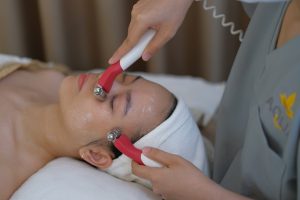
Next up is RF (Radio Frequency) — a technology that uses high-frequency electromagnetic waves in the 0.3–10 MHz range to gently heat subcutaneous tissue to a therapeutic 40–45°C. If HIFU is like an “arrow” — precise, deep, and focused on a single target point — then RF is like a “heat wave” that spreads comfortably and evenly across the entire treatment area. This controlled thermal energy stimulates fibroblasts (the cells responsible for producing structural proteins) to ramp up production of new collagen and elastin, while simultaneously causing existing old collagen fibers to contract and tighten — delivering an immediate and progressive overall skin-firming effect. The sensation during treatment is genuinely pleasant: a warm, soothing, spa-like heat reminiscent of a hot stone massage, with zero sharp pain. RF is best suited for people aged 25–40 whose skin is beginning to show mild but noticeable signs of aging: fine expression lines around the eyes and mouth, mildly reduced firmness, enlarged pores, and a slight loss of radiance. RF is also highly effective at improving the appearance of atrophic acne scars and refining overall skin texture and smoothness. Advantages: the treatment feels wonderful and relaxing, visible firming results typically appear within 2–4 weeks, the per-session cost is reasonable, and it combines beautifully with many other aesthetic protocols such as mesotherapy or chemical peels. Drawbacks: RF works at a shallower depth than HIFU (approximately 1–3mm), so it cannot physically reach the deeper SMAS layer, and it requires a more committed treatment series — typically 6–10 sessions spaced 1–2 weeks apart for optimal, cumulative results.
Finally, we have Nano technology — the gentlest and most versatile of the three. Nano skin rejuvenation uses ultra-fine carrier particles sized between 10–100 nanometers (one nanometer is one billionth of a meter) to escort active nutrients and therapeutic compounds deep through the stratum corneum, the skin’s notoriously selective protective barrier. Thanks to their enormous surface-area-to-size ratio, nanoparticle carriers can hold and transport multiple times the amount of active ingredients compared to conventional delivery systems, and they slip effortlessly through the microscopic gaps between corneocytes (dead skin cells) — reaching the living epidermis and upper dermis where they can do their work. This technology is truly suitable for all ages, from young adults maintaining healthy skin to mature clients needing deep nourishment. It particularly shines for those with dry, dehydrated, dull, or lifeless complexions who want deep, multi-level hydration and an instant, luminous skin brightening effect. People with a low pain tolerance or needle phobia will absolutely love Nano, as the sensation is cool, refreshing, and completely comfortable — zero pain, zero downtime. Advantages: skin becomes visibly brighter, smoother, more hydrated, and more radiant after just a single session, and it’s the most affordable entry point among the three technologies. Drawbacks: the effects are primarily hydration, brightening, and surface-level refinement — Nano does not provide the structural lifting or deep firming benefits that HIFU and RF deliver at the dermal and subdermal levels. Regular maintenance sessions (every 2–4 weeks) are needed to sustain and build upon the results.
So which one should you choose? It all comes down to your primary concern. If you want to lift facial muscles, visibly reduce sagging, and contour your jawline and chin → choose HIFU. If you want overall skin firming, smoother texture, reduction of fine lines, and visibly minimized pores → choose RF. If you want deep, lasting hydration, an instant glow-up, and the most comfortable, zero-discomfort experience → choose Nano. And if you’re still unsure — which is completely normal when navigating the world of modern aesthetics — come visit Aqua Spa for a complimentary, no-obligation skin analysis using advanced diagnostic tools. Our experienced specialists will precisely analyze your skin’s condition, listen to your goals, and recommend the single most suitable technology — or, very often, design a strategic combination protocol that layers two technologies together in one treatment plan to optimize your results from every angle. Book your appointment today and take the first step towards your best skin.