Insomnia. Two syllables that sound almost trivial until you have lived through its merciless grip. You lie in bed, eyes closed, but your mind is running a marathon — replaying the unfinished tasks of today, rehearsing the anxieties of tomorrow, and suddenly remembering at 2 a.m. that you never replied to an email from three days ago. The clock ticks forward: midnight, 1 a.m., 2 a.m., 3 a.m. You finally drift off as the sky begins to lighten, only to be jolted awake by the alarm, feeling more depleted than you did before going to bed. The vicious cycle repeats, night after night. Sleeping pills? You worry about dependency and tolerance. Meditation? Your mind won’t stay still long enough to begin. Exercise? Exhausted but still wired. A glass of wine? You fall asleep but wake up with a headache and deeper fatigue. And then a friend — someone who battled the same insomnia demon — says casually: “Try acupressure. I didn’t think it would work either, but it genuinely does.”
Acupressure. For many, the term conjures up images of a grey-bearded herbalist in a traditional medicine shop, surrounded by the scent of mugwort and incense smoke. But in reality, acupressure is a therapeutic method formally recognized by the World Health Organization (WHO) as effective for over 40 different medical conditions — ranging from insomnia, headaches, and migraines to digestive disorders, chronic lower back pain, and poor blood circulation. Unlike acupuncture, which requires needles (penetrating the skin and demanding a specialist practitioner in strictly sterile conditions), acupressure uses only the pressure of fingers, palms, and occasionally elbows to stimulate acupoints — specific sites on the body where meridians intersect. Traditional East Asian medicine holds that each acupoint is connected to a particular organ system, and when you apply pressure to the right point, at the right force, for the right duration, the blocked flow of qi is unblocked, allowing the body to self-regulate back toward balance.
## How Modern Science Explains Acupressure
So how does modern science make sense of this ancient practice? Functional magnetic resonance imaging (fMRI) studies have revealed that stimulating acupoints produces real, measurable changes in brain activity — this is not a placebo effect. When pressure is applied to specific acupoints, the hypothalamus is activated, prompting the pituitary gland to release endorphins and enkephalins — the body’s natural painkillers, up to 200 times more potent than morphine. Simultaneously, the pineal gland increases production of melatonin, the hormone that governs the sleep-wake cycle. Perhaps most crucially for those suffering from stress and insomnia, the parasympathetic nervous system — the “rest-and-digest” system responsible for recovery and restoration — is engaged, while the sympathetic nervous system, the “fight-or-flight” system that stays chronically over-activated in people under prolonged stress, is dialed down.
This neurobiological shift is the bridge between ancient wisdom and modern clinical evidence. When a skilled therapist presses into the Anmian (Peaceful Sleep) point behind your earlobe, they are not pushing on some mystical energy field — they are triggering a cascade of neurochemical events that literally rewire your nervous system toward a state of deep relaxation. A 2019 systematic review published in the Journal of Sleep Research examined 18 randomized controlled trials and concluded that acupressure significantly improved both subjective sleep quality and objective sleep parameters — including reduced sleep latency (the time it takes to fall asleep), increased total sleep duration, and fewer nighttime awakenings. Another meta-analysis in Evidence-Based Complementary and Alternative Medicine found that acupressure outperformed sham acupressure and was comparable to low-dose sleep medications, but without the grogginess, dependency risk, or tolerance issues that accompany pharmaceutical interventions.
## The Art of Acupoint Prescription at Aqua Spa
At Aqua Spa, acupressure is not the kind of casual shoulder rub with a few half-hearted presses thrown in for show. Every therapist on the team has undergone formal training at the Vietnam Academy of Traditional Medicine and Pharmacology — they hold an intimate command of the 361 principal acupoints distributed along the 12 primary meridians and 8 extraordinary vessels. But more important than memorizing point locations, they understand the principle of point prescription — the art of selecting the right combination of acupoints for a specific condition. Pressing more points is not better; what matters is pressing the right points, in the right sequence, for the right amount of time.
For insomnia, Aqua Spa therapists target what Eastern medicine calls the “golden triangle” of sleep: Anmian (located behind the earlobe, in the depression between the mastoid process and the sternocleidomastoid muscle), Shenmen (HT-7, at the wrist crease on the ulnar side), and Sanyinjiao (SP-6, three finger-widths above the medial malleolus of the ankle). Each of these three points alone has demonstrated sleep-promoting effects in clinical studies, but combined together in a single session, their synergistic effect creates a powerful sedative response that is entirely natural.
For tension headaches and stress-induced migraines, the session incorporates Fengchi (GB-20, at the base of the skull in the hollow between the two large neck muscles), Taiyang (EX-HN5, at the temples), and Hegu (LI-4, in the webbing between thumb and index finger). For poor circulation and chronically cold hands and feet, the protocol adds Zusanli (ST-36, four finger-widths below the kneecap, one finger-width lateral to the shin bone), Xuehai (SP-10, on the inner thigh), and Yongquan (KI-1, on the sole of the foot). Each point is pressed for 30 to 45 seconds with precisely calibrated force — enough to generate a pleasant tingling or distending sensation that spreads outward, which traditional practitioners call “de qi,” the signal that the point has been correctly activated. The pressure is never painful, but it is deeply present, like a key turning in a lock you didn’t realize had been jammed for years.
## What Acupressure Feels Like — And Why Clients Come Back
For a first-timer, the sensation of acupressure can be somewhat unfamiliar. It is not the sharp, pinpoint pain of a needle, but rather a dull, deep, spreading ache — sometimes described as “sweet pain” or “good hurt.” You feel a tingle that radiates along a pathway, a brief wave of warmth, and then a sense of release as the point yields under the therapist’s steady pressure. Initially it might feel slightly uncomfortable, but clients who return regularly often say they become “addicted” to the sensation. It is as though someone is flipping a switch for energy circuits that have been shut down for too long.
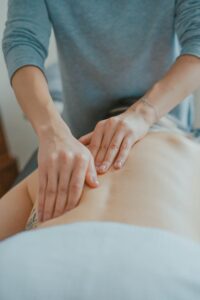
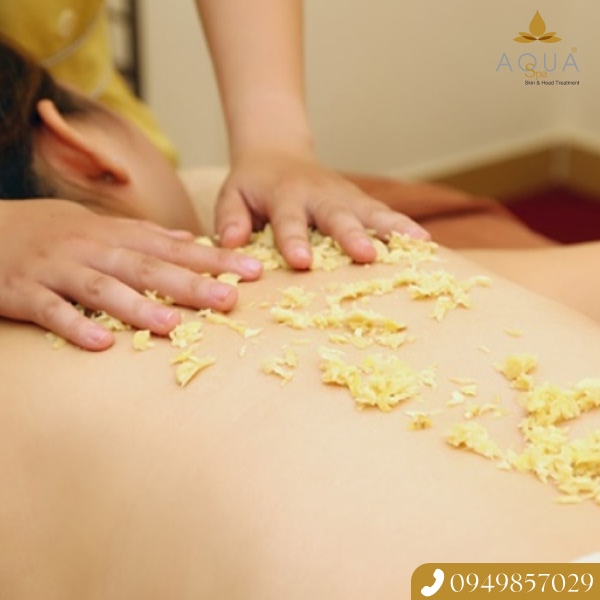
After a 60-minute session that combines acupressure with a full-body warm ginger oil massage, the urge to sleep arrives with a gentleness that feels almost foreign to the chronic insomniac. This is not the crashing exhaustion of burnout, nor the chemical fog of sleeping pills. It is the healthy, profound drowsiness of a body that has finally been granted real permission to let go. The nervous system, which had been running on high alert for months or years, finally downshifts into its restorative mode. According to internal surveys at Aqua Spa, 85 percent of clients report measurably deeper sleep on the very first night following treatment — falling asleep faster, staying asleep longer, and waking up feeling genuinely refreshed rather than groggily clawing their way toward consciousness.
## Self-Care That Extends Beyond the Treatment Room
One aspect that distinguishes Aqua Spa from many other wellness centers is the post-treatment education they provide. After the session concludes, the therapist spends an additional 5 to 10 minutes teaching you how to self-apply pressure to 3 to 5 key acupoints at home. Just 5 to 10 minutes each evening before bed — gently pressing the Anmian point behind your ear and the Shenmen point at your wrist crease with your own fingertips — can yield noticeable improvements in sleep quality within just a few days. This philosophy embodies the proverb: “Give a person a fish and you feed them for a day; teach a person to fish and you feed them for a lifetime.” Aqua Spa wants you to be an active participant in your own health journey, not permanently dependent on visiting the spa.
The home routine they recommend is elegantly simple. Sit comfortably on the edge of your bed. Use your thumb or index finger to apply steady, moderate pressure to Shenmen (HT-7) on your left wrist for 30 seconds, then switch to the right wrist. Move to Anmian behind both ears — press with both index fingers simultaneously for 45 seconds while breathing slowly and deeply. End with a gentle circular massage of Yongquan (KI-1) on the soles of both feet. The entire sequence takes less than 10 minutes, requires no equipment, costs nothing, and can be done anywhere. Many clients report that this nightly ritual, combined with monthly professional sessions at Aqua Spa, has transformed their relationship with sleep more dramatically than any single intervention they had previously tried.
## Who Should Approach Acupressure With Caution
Acupressure is among the safest therapeutic modalities available — it is non-invasive, drug-free, and suitable even for elderly individuals who cannot take pain medication or sleep aids. However, there are certain contraindications that deserve attention. Women in the first trimester of pregnancy should avoid acupressure, as certain points — notably Hegu (LI-4) and Sanyinjiao (SP-6) — may stimulate uterine contractions. Individuals with bleeding disorders, those currently running a high fever, or anyone with an acute systemic infection should also postpone treatment. Open wounds, active skin infections, or tumors at the intended pressure sites are further contraindications. As with any therapeutic intervention, always provide a complete and honest health history to your practitioner before beginning a session. For the vast majority of people, however, acupressure represents a remarkably low-risk, high-reward path toward better sleep and improved circulation.
A good night’s sleep — something so many people take entirely for granted — is, for those wrestling with chronic insomnia, one of the most precious gifts imaginable. But sometimes the solution does not reside in expensive pharmaceuticals or elaborate medical interventions. It lies in the small, precise acupoints distributed across your own body — waiting only for a skilled, knowledgeable touch to unlock their potential. Book a Therapeutic Acupressure Massage session at Aqua Spa and reclaim the restorative sleep you deserve.